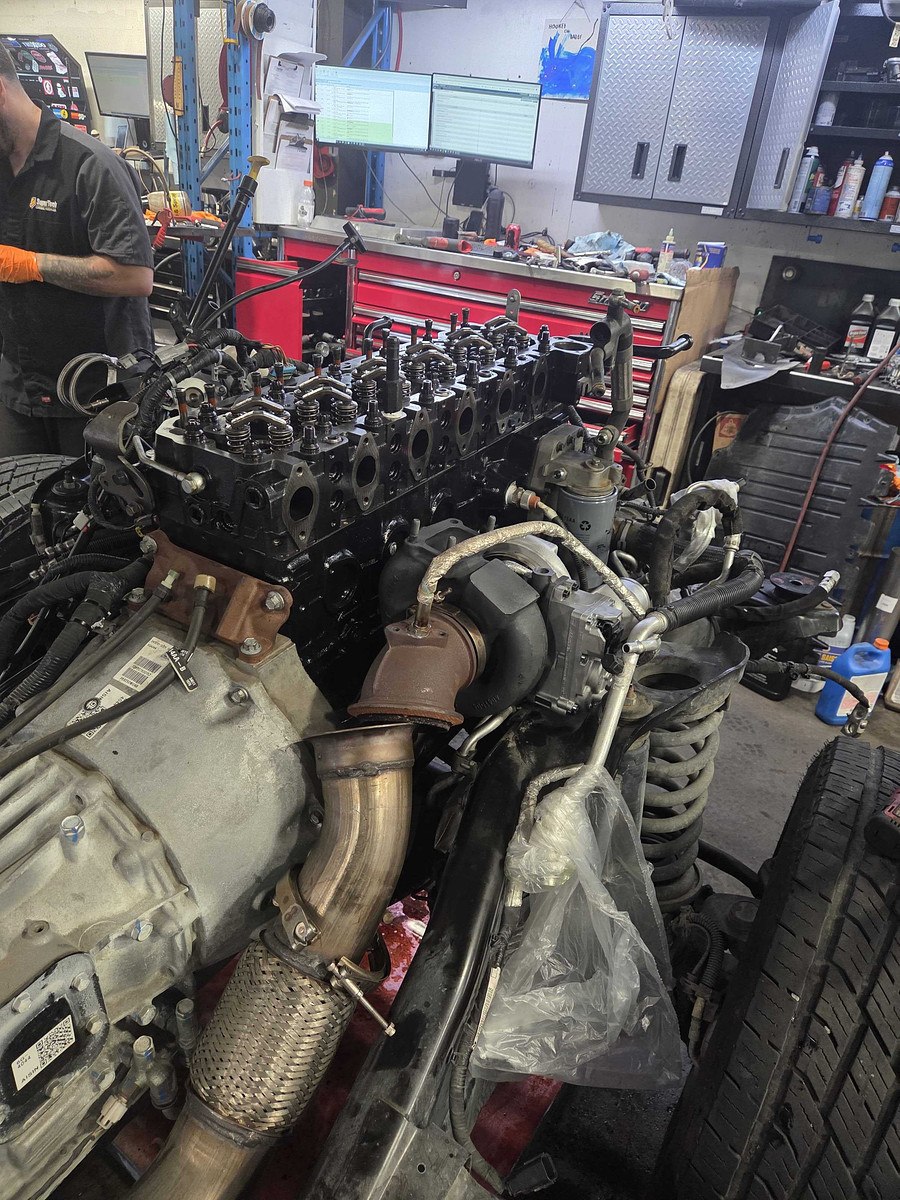
Common 6.7L Cummins Diesel Problems We Diagnose
Modern Cummins engines are built for demanding work, but certain components can develop problems over time. Identifying the root cause early can help prevent unnecessary repairs and reduce the risk of further damage.
Cummins Grid Heater Bolt Failure
Grid heater bolt failure is a serious concern on certain 6.7L Cummins engines. The factory intake grid heater contains electrical connection hardware that can deteriorate or loosen. In some cases, a loose fastener can enter the engine through the intake system and cause severe internal damage to pistons, valves, and cylinder components.
An intake air heater fault code may indicate an electrical problem, but it does not automatically confirm a loose grid heater bolt.
At SuperTech Diesel Repair, we can inspect the intake heater system, investigate related faults, and explain appropriate repair or preventive maintenance options.
Cummins CP4 High-Pressure Fuel Pump Problems
Certain 2019–2020 RAM trucks equipped with the 6.7L Cummins were affected by a high-pressure fuel pump recall. A failing fuel pump can cause low fuel pressure, hard starting, engine stalling, reduced performance, or a complete no-start condition.
In some failures, metal debris from the pump can contaminate other fuel system components, including injectors, fuel rails, and fuel lines.
Our diesel technicians diagnose fuel delivery and high-pressure fuel system concerns using appropriate testing procedures. We assess the condition of affected components before recommending repairs.
If you own a 2019–2020 RAM Cummins, it's also worth checking whether the applicable factory recall has been completed.
Cummins Roller Lifter & Camshaft Problems
Some 2019-and-newer 6.7L Cummins engines can experience hydraulic roller lifter and camshaft problems. A damaged lifter may affect valve operation and, in more severe cases, damage the camshaft or introduce metal debris into the lubrication system.
Possible warning signs include unusual ticking or knocking noises, rough idle, misfires, reduced performance, or metal particles found during an oil inspection. These symptoms can have several causes. Proper diagnosis is important before assuming an internal engine failure.
If your Cummins has developed an unusual engine noise, our technicians can investigate the concern and help determine the appropriate next step.
Cummins Fuel Injector Problems & Hard Starting
Fuel system problems are a common reason diesel owners seek professional diagnostics. If your Cummins is difficult to start, runs roughly, produces excessive smoke, or struggles under load, the issue may involve fuel injectors, fuel filters, fuel supply pressure, high-pressure fuel control, electrical components, or engine mechanical condition.
Our diagnostic process may include fuel pressure testing, injector performance evaluation, electronic system checks, and other targeted procedures. The goal is to identify the cause of the concern rather than replace expensive fuel system components unnecessarily.
Cummins Turbocharger Repair & Low Boost
Your Cummins turbocharger plays a critical role in engine power, towing performance, and efficiency. Turbocharger and boost-system problems may cause reduced acceleration, poor towing performance, unusual noises, excessive exhaust smoke, or check engine lights.
Common concerns include turbo actuator faults, sticking variable geometry components, boost leaks, sensor failures, and turbocharger wear. At SuperTech Diesel Repair, we evaluate the turbocharger and supporting systems to determine whether the concern requires adjustment, component repair, or replacement.
Cummins DPF, DEF, SCR & EGR System Repair
Modern 6.7L Cummins engines use emissions control systems that must work together correctly. Common warning messages include Service DEF System, Exhaust System Service Required, Reduced Engine Power, DPF Full, and Regeneration Required.
These warnings can be associated with NOx sensors, exhaust temperature sensors, DEF pumps, DEF injectors, EGR components, DPF restrictions, or SCR system faults.
Replacing a component based solely on a warning message can be expensive and may not resolve the underlying problem. Our Nanaimo diesel specialists diagnose emissions system faults using professional scan tools, live data, electrical testing, and appropriate system checks. We focus on identifying the actual cause and completing compliant repairs.
Cummins Engine Smoke, Rough Running & Loss of Power
Black, white, or blue exhaust smoke can indicate different concerns. Black smoke may be associated with excess fuel or insufficient air. White smoke can result from unburned fuel or, in some cases, coolant entering the combustion process. Blue smoke can indicate engine oil being burned.
Similarly, rough running or a loss of power may be caused by fuel delivery problems, turbocharger faults, air intake restrictions, sensor failures, or internal engine issues. Because these symptoms can overlap, accurate testing is important before making repair decisions.